Love ‘em or hate ‘em, you’ll probably find one in the pages of your next read. But what if you’re reading to escape? Here are the pros and cons of pop culture references in books.
By Jayne Turner – Staff Writer
Picture this: You’re deep in a fantasy novel, completely lost in a medieval kingdom where Knights charge and battle axes fly through the air. Then suddenly—bam—a character drops a TikTok reference. The spell is broken. You’re back in your bedroom, confused and slightly annoyed.
Welcome to the great pop culture debate of modern literature.
The Case Against: Why Your Favorite Book Might Not Age Like Fine Wine
It Has an Expiration Date
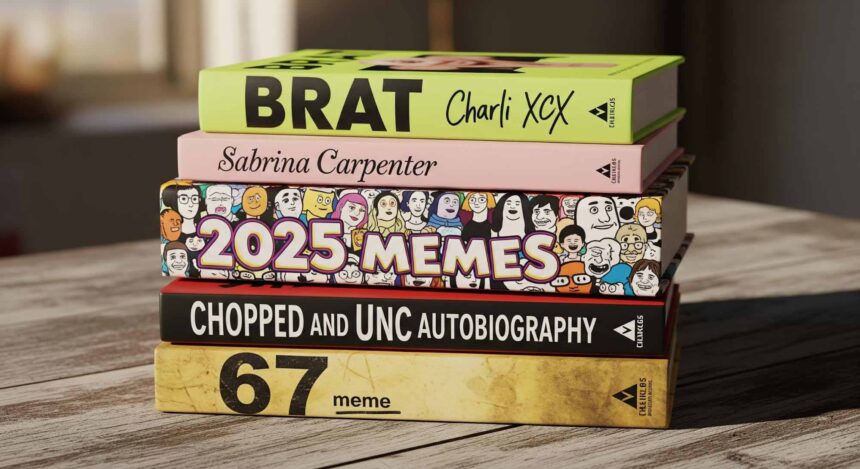
Here’s the brutal truth: that fire meme from 2025? Crickets in 2080. Every trending song, viral moment, and internet inside joke is writing checks that future readers can’t cash. Books laced with contemporary references don’t just age—they decay. What feels fresh and relatable today becomes a confusing artifact tomorrow, leaving future readers scrambling to Google references that once seemed obvious.
And here’s the kicker: while teenagers might vibe with current slang, older readers are already side-eyeing those same phrases. Authors face an impossible choice—speak to the moment or speak to eternity. Rarely can you do both. Language is changing faster than ever, these days, can authors keep up?
It Shatters the Illusion
Books are magic. They’re portals to other worlds, other lives, other possibilities. Your imagination paints every scene, sculpts every character, builds entire universes from carefully chosen words. Then—crash—an out-of-place pop culture reference demolishes that delicate construction.
One minute you’re solving a murder mystery in 1920s Paris. The next, someone makes a Spotify joke and suddenly you’re yanked back to 2025, aware that you’re just reading a book. The fourth wall doesn’t break—it explodes.
Books should be adventurous escapes where heroes face impossible odds and overcome real obstacles. They shouldn’t be monuments to Gen Alpha brainrot or whatever ephemeral internet chaos dominated last Tuesday’s timeline.
You don’t see emojis in books either. Check out this article about commonly used emojis and what they actually mean.
The Case For: Why Pop Culture Might Actually Save Your Story
It Creates Instant Connection
But wait—what if that’s the point?
When a character mentions your favorite band, shares your comfort movie, or quotes the same meme you sent your friend yesterday, something clicks. Suddenly they’re not just words on a page—they’re real. They exist in the same world you do, breathing the same cultural air, navigating the same digital landscape.
The trick? Go broad. The Beatles, The Wizard of Oz, Shakespeare—these are timeless cultural touchstones that transcend generations. They prove pop culture references can work when they’re iconic enough to outlive their moment. Sure, not every reference needs to survive centuries, but the best ones establish common ground without building walls.
It Time-Stamps Your Story (When You Need It)
Sometimes dating your book isn’t a bug—it’s a feature. Pop culture references become historical markers, anchoring readers in specific moments. Elvis places us firmly in mid-century America. One Direction signals the 2010s. These references don’t just add flavor; they provide context, building a world that feels lived-in and authentic.
Modern books don’t use Old English anymore, but that doesn’t mean they should drown in every piece of slang the author can cram in. There’s a balance between contemporary voice and trying too hard. Authenticity doesn’t require exhaustive trend-chasing. If you’re an author trying to figure out a savvy way to include pop culture in your narrative, this article can help.
It Captures the Zeitgeist
Here’s something future historians will thank us for: books that honestly reflect their era, memes and all. These references create time capsules, preserving not just events but feelings—the texture of what it meant to be alive right now. Yes, they might confuse readers in 2080, but they’ll also give those readers an unfiltered window into 2025.
Isn’t that worth something?
For example, maybe you’ve heard of the NNN challenge… yeah. If you haven’t, check out this article at your own risk. You may discover a trend you never knew existed.
The Verdict: It’s Complicated
Should books include pop culture references? The answer is frustratingly nuanced: it depends.
Done well—sparse, intentional, and meaningful—they breathe life into characters and ground stories in reality. Done poorly, they’re cheap gimmicks that alienate readers and guarantee your book collects dust in a decade.
The best books balance timelessness with timeliness, using cultural references as seasoning, not the main course. They create characters so rich and conflicts so compelling that a few dated references can’t sink the ship.
Books should be accessible to readers across ages and eras. But they should also be honest—and sometimes honesty means acknowledging that we live in a world of trending sounds and viral moments.
So if you love pop culture-packed books? That’s totally valid. If you hate them? Also fair. The beauty of literature is there’s room for both—and everything in between.
Just maybe… let’s leave the brainrot at the door.
—
Author: Jayne Turner is a freelance writer from Orange, California. She has a bachelor’s degree in Neuroscience with an emphasis on language and cognition. She has ten years of musical theatre experience and a lifelong love of reading. Utterly excited by the brain, she brings a fresh Gen Z perspective to the topics that intrigue us most.