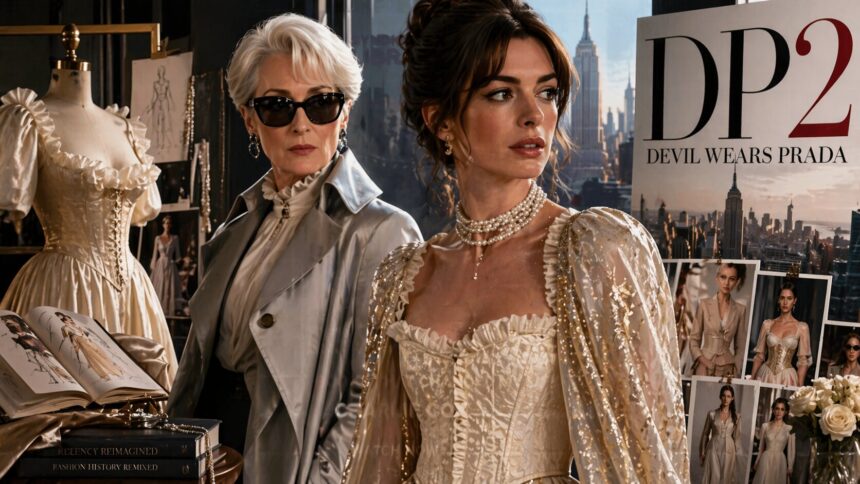
Modern Regency fashion is emerging in 2026 as a direct result of the cultural impact of The Devil Wears Prada 2 premiere. The film’s blend of historical silhouettes and futuristic materials is reshaping how designers and consumers approach style.
Modern Regency fashion is a contemporary trend that merges 19th-century Regency-era elements—such as ruffles, corsetry, and structured tailoring—with modern fabrics, technology, and urban wearability. It transforms historical elegance into everyday fashion.
The premiere of The Devil Wears Prada 2, starring Anne Hathaway and Meryl Streep, has accelerated this shift. What began as costume design is now influencing streetwear, editorial styling, and retail collections, marking a clear transition from casual festival aesthetics to structured, high-glamour dressing.
What Is Modern Regency Fashion?
Modern Regency fashion reinterprets historical dress codes through a contemporary lens. It borrows from early 19th-century silhouettes while adapting them for modern lifestyles.
Key elements include high waistlines, layered fabrics, and dramatic textures. However, these are paired with modern materials like performance textiles, metallic finishes, and modular accessories.
The result is a hybrid aesthetic. It feels theatrical yet wearable, structured yet flexible. This balance allows the trend to move beyond costume and into everyday fashion.
Designers are not replicating history—they are remixing it. The goal is to capture the emotional resonance of period dressing while maintaining practicality.
How Did The Devil Wears Prada 2 Trigger This Trend?
The film’s costume design plays a central role in shaping Modern Regency fashion. Unlike traditional period dramas, it does not aim for historical accuracy. Instead, it creates a stylized version of the past.
Costume designers combine corsetry with tech fabrics, and flowing gowns with structured outerwear. This contrast creates a visual language that feels both nostalgic and futuristic.
Fashion editors have noted that the film’s premiere immediately influenced runway collections and editorial shoots. Within days, similar silhouettes appeared in fashion campaigns and social media styling content.
This rapid adoption highlights how film now functions as a primary driver of fashion trends. The gap between screen and street has shortened significantly.
Why Are Audiences Embracing Period-Inspired Style?
The appeal of Modern Regency fashion lies in its ability to offer escape without disconnecting from reality. It provides visual drama while remaining adaptable to modern life.
Audiences are drawn to clothing that feels expressive. Period-inspired elements allow individuals to experiment with identity and presentation in a way that minimalist trends do not.
There is also a psychological dimension. Structured, layered clothing creates a sense of control and intention, which contrasts with the unpredictability of daily life.
This explains why high-glamour styles are gaining traction. They offer both aesthetic satisfaction and emotional grounding.
There is also a psychological dimension. Structured, layered clothing creates a sense of control and intention, which contrasts with the unpredictability of daily life. This connection between personal expression and mental resilience is further explored in Building Resilience With Positive Thinking Daily.
From Screen to Street: How the Trend Is Spreading
The transition from film costume to everyday wear is happening quickly, driven by digital platforms and fashion media.
Lifestyle editors and stylists are breaking down the film’s looks into wearable components. Instead of full outfits, they highlight individual elements that can be integrated into daily wardrobes.
Common adaptations include:
- Pairing corset-inspired tops with casual denim or tailored trousers. This makes historically structured pieces feel accessible.
- Incorporating ruffled blouses or layered skirts into modern outfits without recreating full period ensembles.
- Using accessories—such as gloves, statement collars, or embellished bags—to introduce the aesthetic subtly.
These strategies allow the trend to scale across different levels of commitment.
How Does This Compare to the “Modern Boho” Shift?
Modern Regency fashion marks a clear departure from the relaxed, festival-driven styles that dominated earlier in the year.
“Modern Boho,” popularized through events like Coachella, emphasized flowy fabrics, earthy tones, and casual layering. It reflected ease and informality.
In contrast, Modern Regency embraces structure, ornamentation, and visual impact. It signals a move toward intentional dressing rather than effortless styling.
This shift suggests a broader change in fashion priorities. Instead of comfort alone, people are seeking expression and presence.
The contrast between these two trends highlights how quickly cultural aesthetics can evolve.
What This Trend Says About Fashion Culture in 2026
The rise of Modern Regency fashion reflects a growing interest in maximalism and narrative-driven style. Clothing is becoming a form of storytelling rather than just functionality.
This trend also shows how audiences engage with media. Films are no longer separate from fashion—they are part of the same cultural ecosystem.
Consumers expect to interact with trends across multiple platforms, from cinema to social media to retail. This interconnectedness accelerates adoption and amplifies impact.
At the same time, the popularity of historically inspired elements suggests a desire to reconnect with craftsmanship and detail. In a digital-heavy world, tactile, intricate designs offer a different kind of value.
This trend also shows how audiences engage with media. Films are no longer separate from fashion—they are part of the same cultural ecosystem. Similar shifts can be seen in other industries where storytelling influences public perception and access to content, as explored in The Battle Over Banned Books in the 2025 Content Wars.
The Role of Maximalism in Modern Style
Modern Regency fashion aligns with a broader return to maximalism. This movement prioritizes bold choices, layered textures, and visual complexity.
Minimalism dominated for years, emphasizing simplicity and restraint. Maximalism, by contrast, encourages experimentation and individuality.
This shift is not just aesthetic—it reflects changing attitudes toward self-expression. People are more willing to stand out rather than blend in.
Maximalism also allows for personalization. Individuals can interpret the trend in ways that suit their style, making it more inclusive and adaptable.
Conclusion
Modern Regency fashion is gaining momentum in 2026 because it merges historical elegance with contemporary innovation. Driven by the impact of The Devil Wears Prada 2, it represents a shift toward expressive, high-glamour dressing.
As fashion continues to draw from multiple influences, trends like this show how storytelling shapes what people wear. The movement from screen to street highlights a new phase in fashion culture—one where imagination and reality move together.
Frequently Asked Questions
What is Modern Regency fashion?
Modern Regency fashion blends 19th-century design elements like corsets and ruffles with modern fabrics and styling, creating a contemporary take on historical fashion.
Why is The Devil Wears Prada 2 influencing fashion trends?
The film’s stylized costume design introduces visually striking looks that are quickly adopted by designers and stylists, bridging the gap between cinema and real-world fashion.
Is Modern Regency fashion wearable in everyday life?
Yes. Many elements, such as structured tops or layered pieces, can be adapted into daily outfits without recreating full period looks.
External Sources: